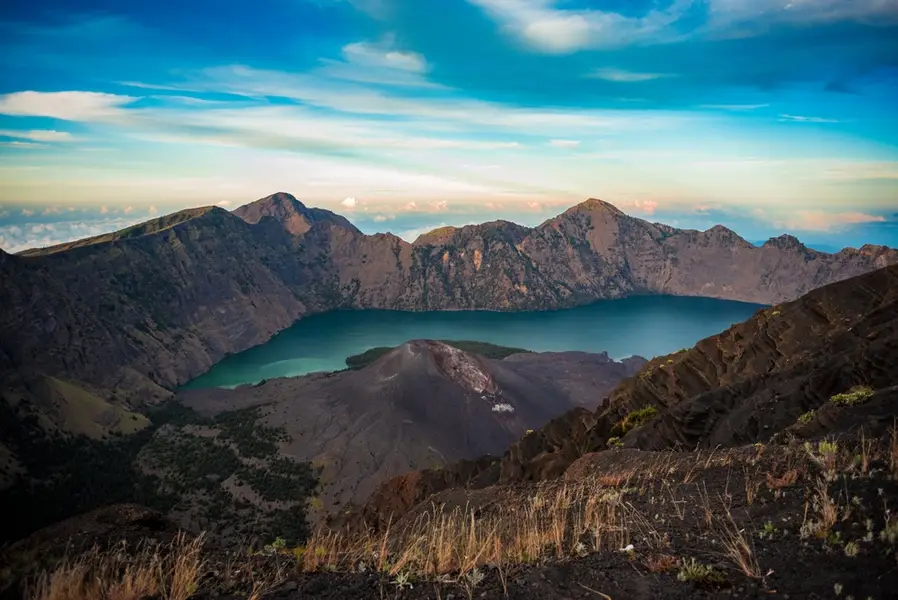
Get On Explore – So, you’ve seen the photos—the turquoise waters of Segara Anak nestled inside a massive volcanic caldera, the clouds swirling beneath the jagged 3,726-meter summit, and the emerald slopes of Lombok stretching toward the sea. Now, you’re thinking about doing it yourself.
Trekking Mount Rinjani isn’t just a hike; it’s a rite of passage for adventurers in Southeast Asia. It’s grueling, dusty, breathtaking, and soul-stirring all at once. But before you lace up those boots, you need more than just a “can-do” attitude. You need the right strategy.
Here is your comprehensive guide to Trekking Mount Rinjani tips, packed with insider secrets to help you reach the top without losing your mind (or your toenails).
1. Timing is Everything: When to Go
The Rinjani National Park isn’t open year-round. Because of the heavy monsoon season in Indonesia, the park typically closes from January 1st to late March/early April due to extreme weather and landslides.
- April – June: The landscape is lush and incredibly green. It’s arguably the most beautiful time, though there’s still a slight chance of rain.
- July – September: The peak season. The weather is stable and dry, but the trails are crowded and it gets very dusty.
- October – December: The transition to the wet season. Fewer people, but the clouds can block those iconic views.
Insider Tip: If you can, aim for a Tuesday or Wednesday start. Most local hikers and weekend warriors from Bali or Java start on Fridays, making the campsites feel like a crowded festival.
2. Choosing Your Route: Senaru vs. Sembalun
There are two main gateways to the mountain, and choosing the right one depends on your fitness and what you want to see.
- Sembalun (The Savannah Route): Most summit attempts start here. You begin at a higher altitude (around 1,100m) in open grasslands. It’s hot as an oven during the day, but the incline is more gradual until you hit the “7 Hills of Regret.”
- Senaru (The Jungle Route): Typically the exit point for the 3D2N trek. It’s a steep climb through dense tropical rainforest. It offers more shade but involves a lot of big steps over tree roots.
The “Pro” Strategy: Start in Sembalun and finish in Senaru. This allows you to tackle the summit while your legs are still fresh on Day 2, and you get the rewarding jungle shade on the final descent when the sun is scorching.
3. Physical Prep: It’s Not a Walk in the Park
Don’t let the Instagram influencers fool you—Rinjani is tough. The final summit push is “two steps forward, one step back” in loose volcanic scree.
- Focus on Cardio: Running or cycling will help your lungs handle the thin air.
- Leg Day is Every Day: Squats, lunges, and calf raises are your best friends.
- The Secret Weapon: Go hiking in the boots you plan to wear. Breaking them in on the mountain is a recipe for blisters and misery.
4. Packing List: The Essentials and the “Pro” Extras
Your porter will carry the tent, sleeping bag, and food. Your daypack should stay under 5-7kg.
The Basics:
- High-quality headlamp: Essential for the 2:00 AM summit push.
- Layers: It might be 30°C at the base, but it can drop to 0°C at the summit. Bring a thermal base layer, a fleece, and a windproof jacket.
- Trekking Poles: These are non-negotiable. Your knees will thank you during the 2,000-meter descent.
The “Insider” Gear:
- Buff/Face Mask: The dust on the Sembalun side is intense. A buff keeps you from coughing up volcanic ash for three days.
- Small Denomination Cash (IDR): You’ll want to buy a cold Bintang or a Pocari Sweat from the “warungs” (small stalls) found unexpectedly high up the mountain. They rarely have change for 100k notes.
- Wet Wipes & Sanitizer: There are no showers. A “wet wipe bath” is the height of luxury at 2,600 meters.
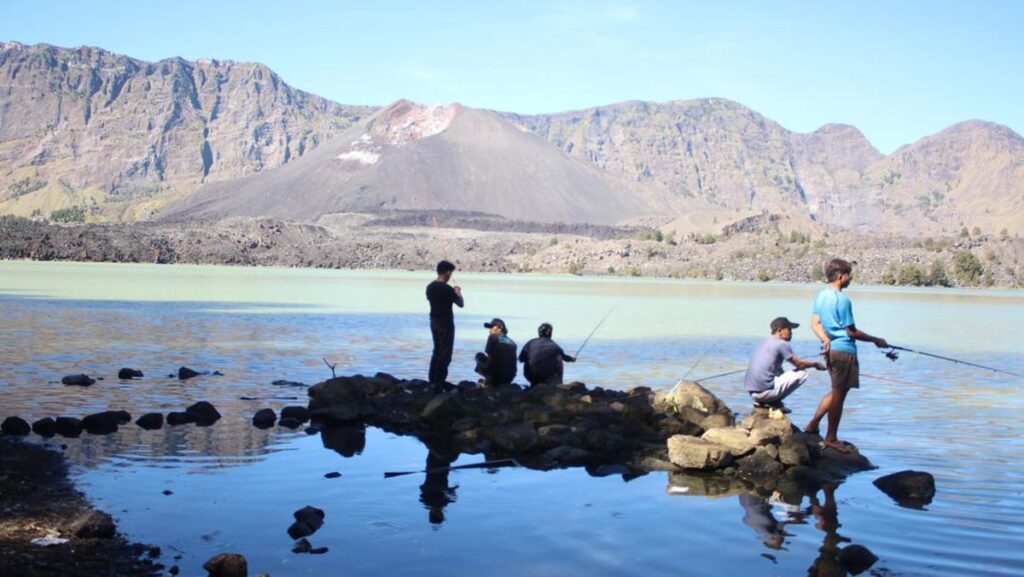
5. Visual Inspiration: What Awaits You
6. The “Insider” Rules of the Trail
To have the best experience, you need to know the stuff that isn’t in the official brochures:
- Protect Your Toenails: When descending, tie your laces extra tight near the ankle to prevent your foot from sliding forward. Many hikers lose toenails because they hit the front of their boots for six hours straight.
- The “Monkey” Warning: The macaques at the crater rim are professional thieves. Do not leave your bags open, and never—ever—feed them. They will find your stash of Oreos in seconds.
- Hydration Strategy: Don’t just drink water; use electrolyte powder. The tropical heat combined with the altitude can lead to dehydration faster than you realize.
- Respect the Mountain: Rinjani is a sacred site for the Sasak and Hindu people. Avoid shouting excessively or acting disrespectfully at the lake.
7. Managing the Summit Push
This is the hardest part. You’ll wake up at 2:00 AM, shivering, to climb the final 1,000 meters of elevation.
- Eat the Toast: Your guide will give you a light breakfast. Even if you’re nervous, eat it. You need the carbs.
- Slow and Steady: It’s not a race. Use a “rest step” technique—lock your rear leg for a split second on every step to give your muscles a micro-break.
- The False Summits: There are three “peaks” before the actual summit. Don’t let your spirit break when you reach a ridge only to see more climbing ahead.
8. Why Local Knowledge Matters
Expertise on Rinjani isn’t just about knowing the path; it’s about safety. Weather patterns can change in minutes. A trusted guide knows when to turn back if the wind gets too dangerous on the summit ridge (the “Letterbox”).
Trustworthiness also comes down to environmental impact. Always choose a trek operator that practices “Leave No Trace.” The mountain has a trash problem; be part of the solution by ensuring your team packs out everything they pack in.
9. Post-Trek Recovery
Once you finish, your body will be screaming for two things: a massage and a soak.
- Hot Springs: Most 3D2N treks include a stop at the Aik Kalak hot springs near the lake. The sulfur is amazing for sore muscles.
- Book a Spa: When you get back to Senaru or your hotel in Senggigi, book a traditional Sasak massage immediately.
Conclusion: Ready to Stand Above the Clouds?
Trekking Mount Rinjani is an experience that stays with you forever. It challenges your limits and rewards you with some of the most spectacular views on the planet. But the difference between a “suffering-fest” and the trip of a lifetime often comes down to the people who lead you.
If you’re looking for a seamless, professional, and deeply local experience, we highly recommend Get on Explore.
As a premier travel organizer specializing in Rinjani and beyond, Get on Explore caters to both international travelers and locals. They provide top-tier camping gear, experienced guides who treat the mountain like home, and porters who are basically superheroes in flip-flops. They handle the logistics, the permits, and the safety protocols so you can focus on the climb.
Ready to start your adventure? Contact Get on Explore today and take the first step toward the summit of Lombok.