Get on Explore – When you travel through Indonesia, you aren’t just moving between islands; you are moving through layers of time. The best cultural art in Indonesia is a tapestry woven from Hindu-Buddhist roots, Islamic influences, and ancient animist beliefs. To see these arts is to witness a living history that refuses to fade.
10 Masterpieces of Indonesian Culture: Stories, History, and Soul
1. Wayang Kulit: The Shadow of Ancestors (Central Java & Yogyakarta)
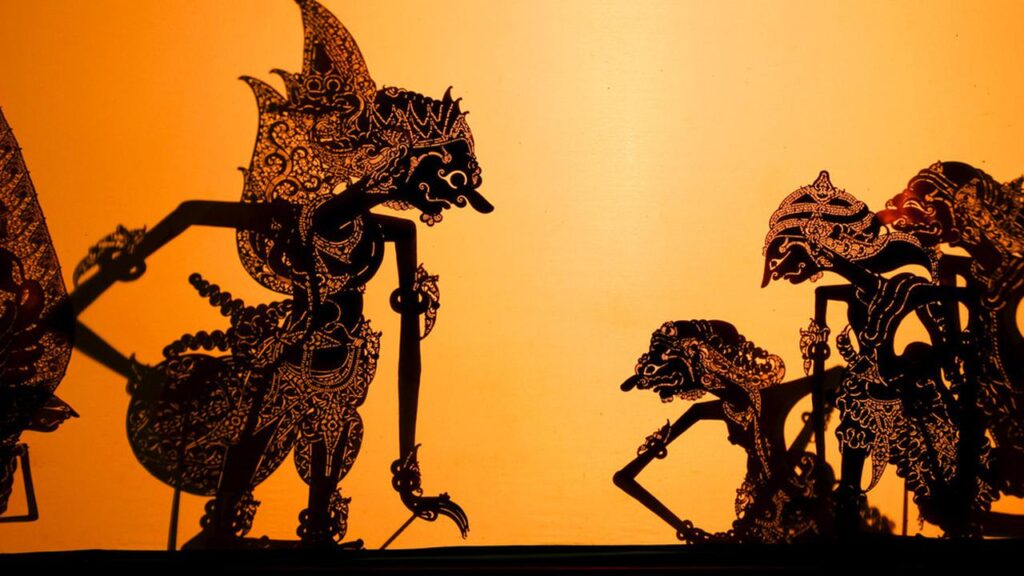
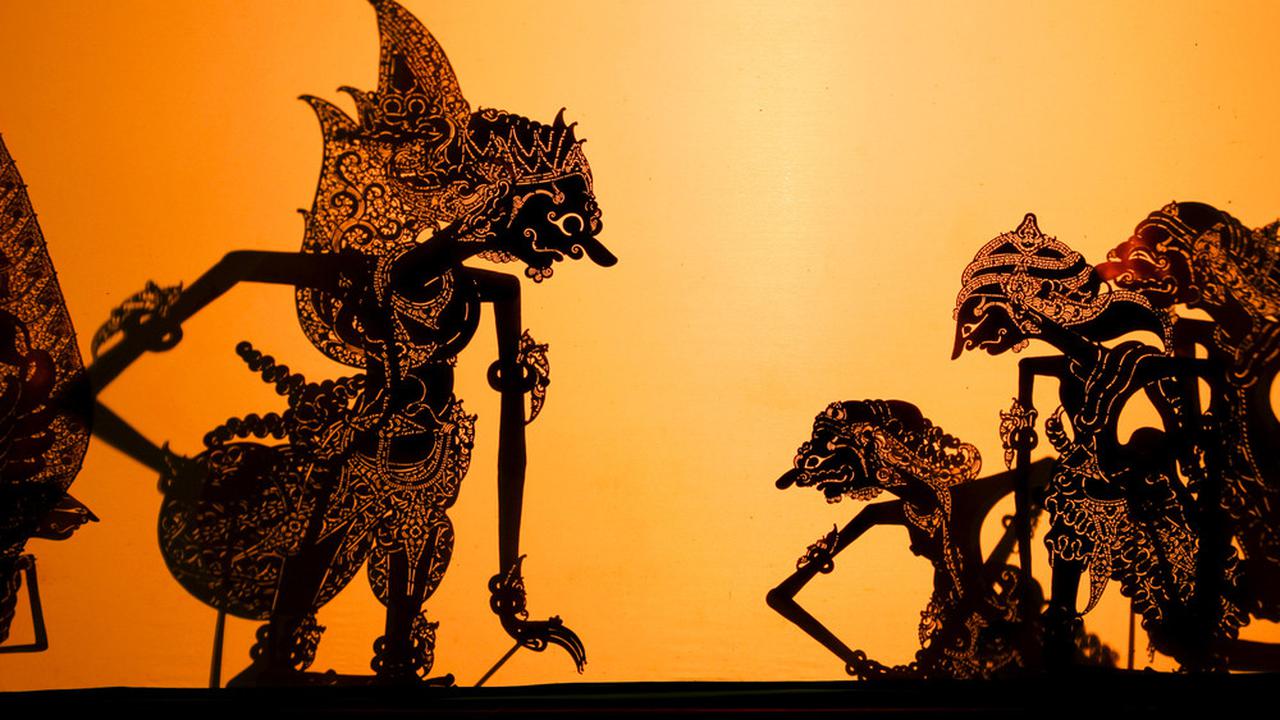
History: Originating over a thousand years ago, Wayang Kulit was once a medium for ancestral worship before being used by religious leaders to spread moral teachings. The Magic: Behind a backlit screen, the Dalang (Master Puppeteer) moves leather puppets carved with needle-thin precision. The Message: It is a cosmic battle between Dharma (good) and Adharma (evil). The shadow represents the human soul, reminding us that what we see in the physical world is often just a reflection of a deeper spiritual reality.
2. Tari Saman: The Symphony of Unity (Aceh)
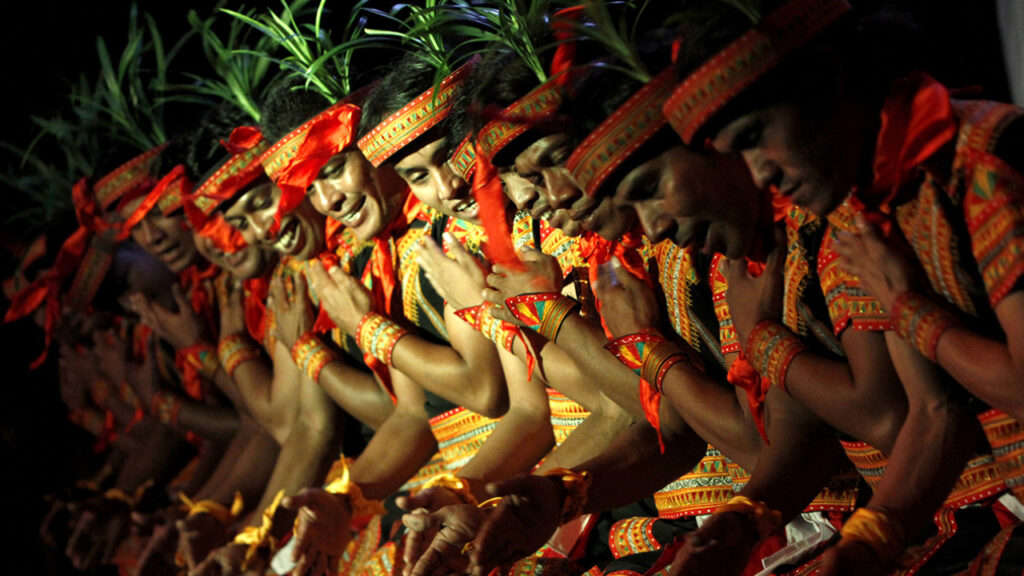
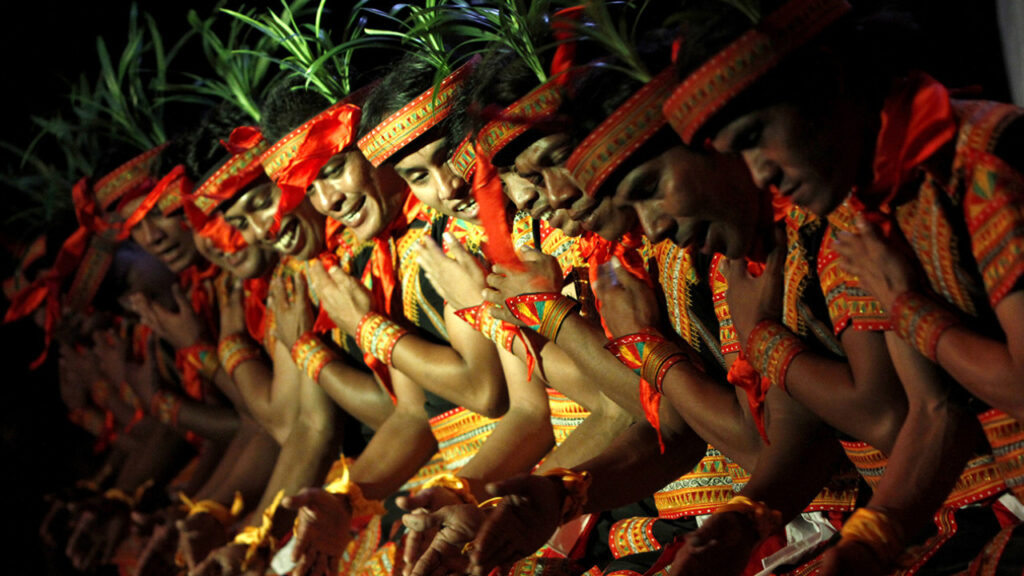
History: Created by the Gayo people in the 13th century, this was originally a medium for dakwah (religious outreach). The Magic: Unlike most dances, Saman uses no instruments. The music comes from the rhythmic clapping of hands, slapping of chests, and the synchronized chanting of dozens of men. The Message: It is the “Dance of a Thousand Hands.” It symbolizes the strength of the community—if one person loses the rhythm, the whole performance falters. It is a lesson in extreme discipline and brotherhood.
3. Tari Bedhaya Ketawang: The Dance of the Goddess (Solo)
History: This is the most sacred dance in the Surakarta Sunanate, performed only once a year to commemorate the Sultan’s accession to the throne. The Magic: Nine female dancers move with such agonizing slowness and grace that they appear to be floating. Legend says the Goddess of the South Sea, Nyai Roro Kidul, joins the dancers in spirit. The Message: The nine dancers represent the human orifices or the planets. It is a meditation on the harmony between the king, his people, and the universe.
4. Tari Reog Ponorogo: The Tiger’s Might (East Java)
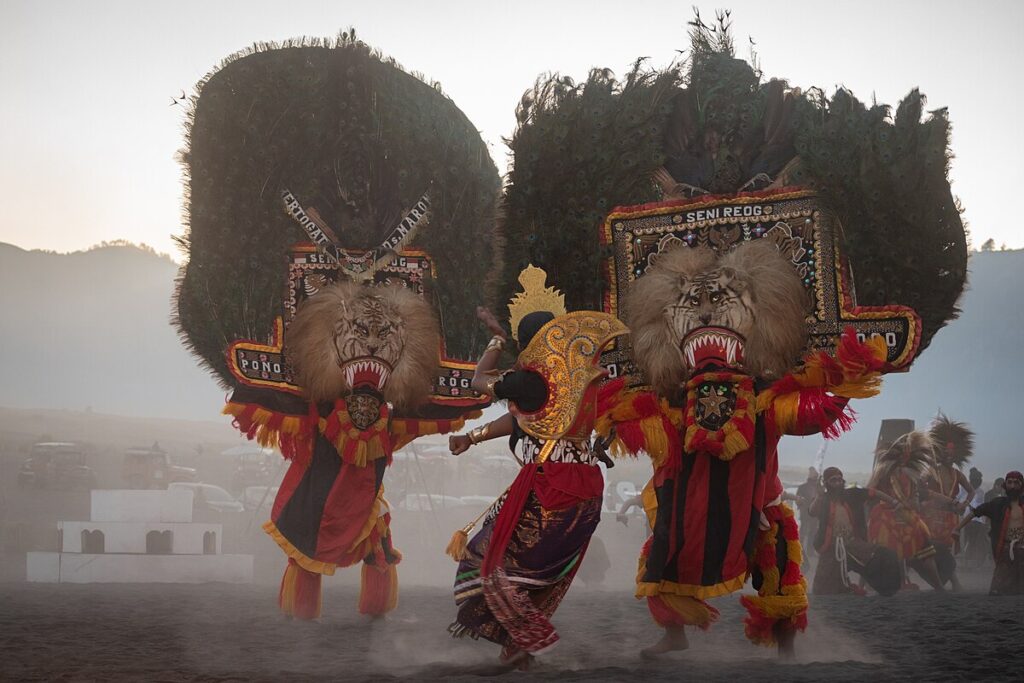
History: Dating back to the Majapahit era, Reog is a satirical story of a king’s rebellion and his love for a princess. The Magic: The lead dancer carries a Singa Barong mask—a massive 50kg structure of a tiger’s head topped with peacock feathers—using only his teeth. The Message: It is a display of “Manunggaling Kawula Gusti” (the union of servant and master), showcasing that with immense spiritual and physical will, humans can overcome the heaviest of burdens.
5. Tari Kecak: The Chant of the Monkeys (Bali)
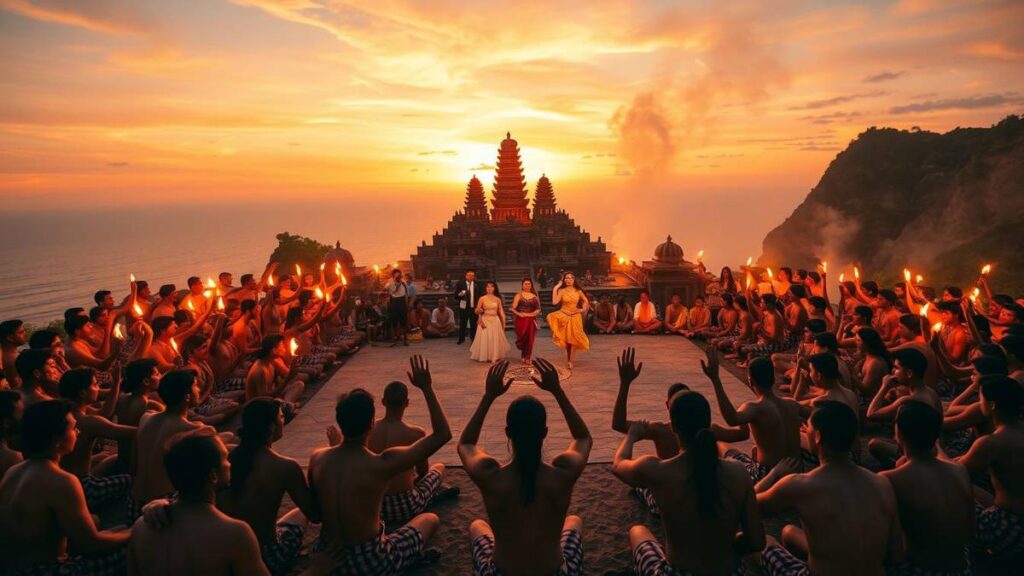
History: Developed in the 1930s in Uluwatu, this dance adapted ancient Sanghyang (exorcism) rituals into a dramatic retelling of the Ramayana. The Magic: Fifty men sit in concentric circles, their arms swaying like branches, creating a polyphonic wall of sound with the chant “cak-cak-cak.” The Message: It depicts the “Monkey Forest” army aiding Prince Rama. It symbolizes how collective voices and unwavering loyalty can defeat even the most powerful demons.
6. Tari Piring: The Balance of Life (West Sumatra)
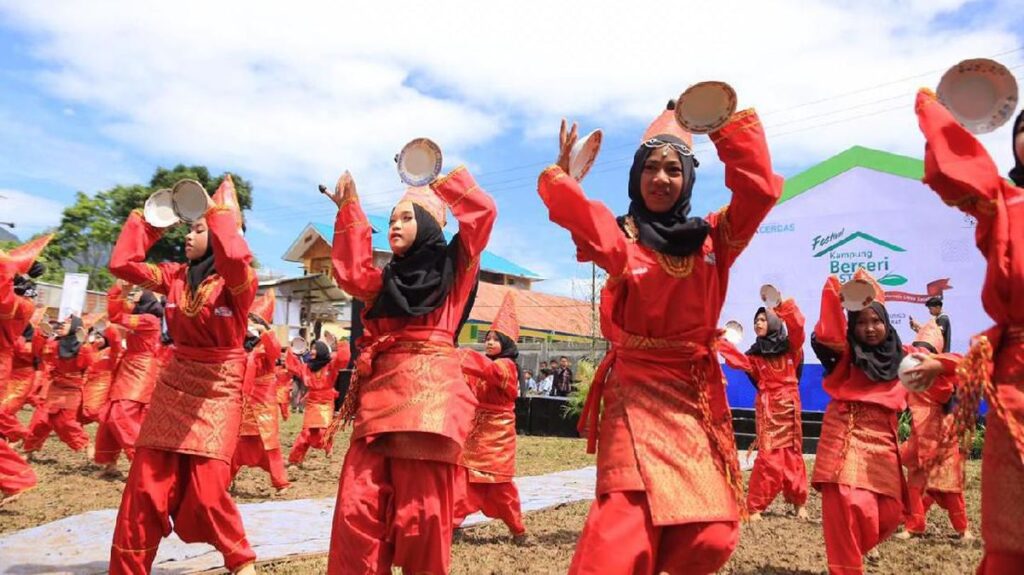
History: Originally a dance of gratitude to the gods after a successful harvest, it evolved after the arrival of Islam into a performance of skill and celebration. The Magic: Dancers hold ceramic plates in their palms, twirling them at high speeds without dropping them—and often ending the dance by leaping onto broken porcelain. The Message: It reflects the elegance and resilience of the Minangkabau people. It teaches that life is a delicate balancing act; even when things break, you must continue to move with grace.
7. Angklung: The Harmony of Bamboo (West Java)
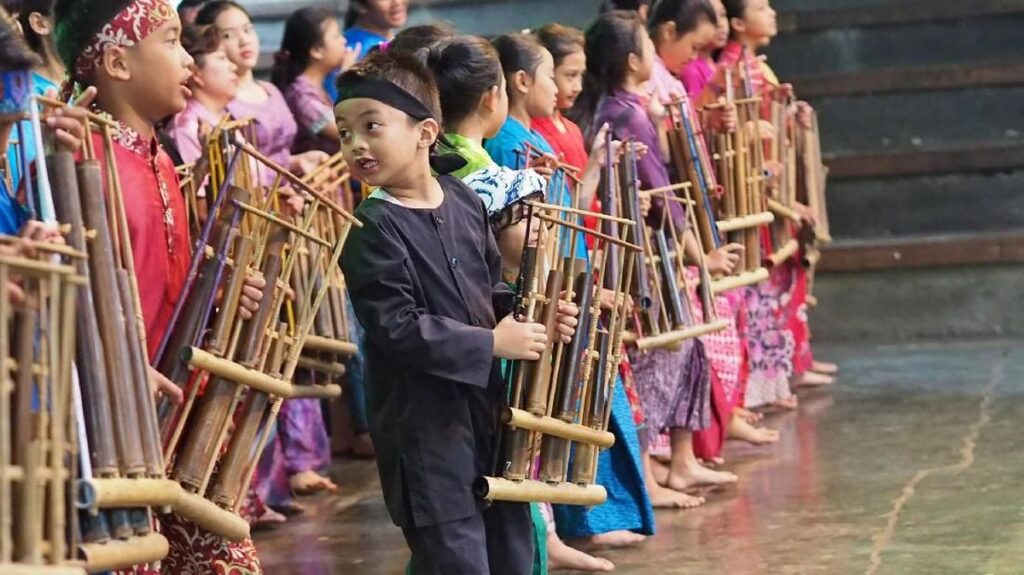
History: This bamboo instrument dates back to the Sundanese Pajajaran Kingdom, used to honor the Goddess of Rice, Dewi Sri. The Magic: A single Angklung only produces one note. To play a melody, a group must work together in perfect timing. The Message: It is the ultimate symbol of Gotong Royong (mutual cooperation). You cannot create a song alone; you need your neighbor to play their part.
8. Tari Serimpi: The Four Elements (Yogyakarta)
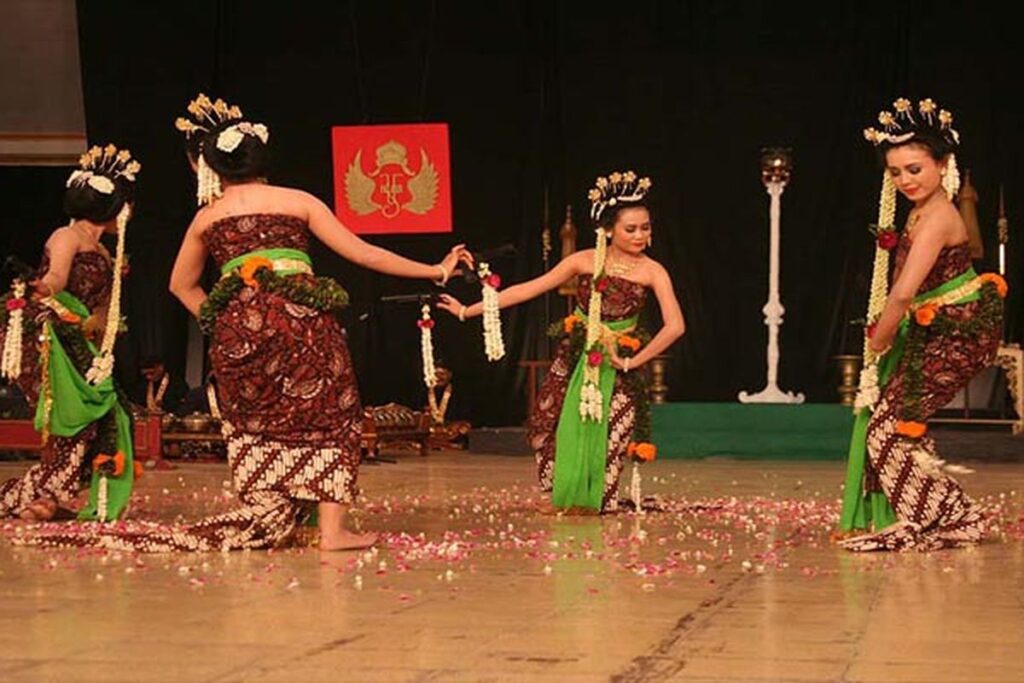
History: Once reserved strictly for the royal courts, Serimpi was a form of meditative training for noblewomen. The Magic: Four dancers represent the four elements: Fire, Water, Air, and Earth. Their movements are so subtle that they signify the triumph of the soul over worldly passions. The Message: It is a lesson in “Alus”—the Javanese concept of refinement. True power does not come from aggression, but from absolute self-control.
9. Tari Tor-Tor: The Pulse of the Batak (North Sumatra)
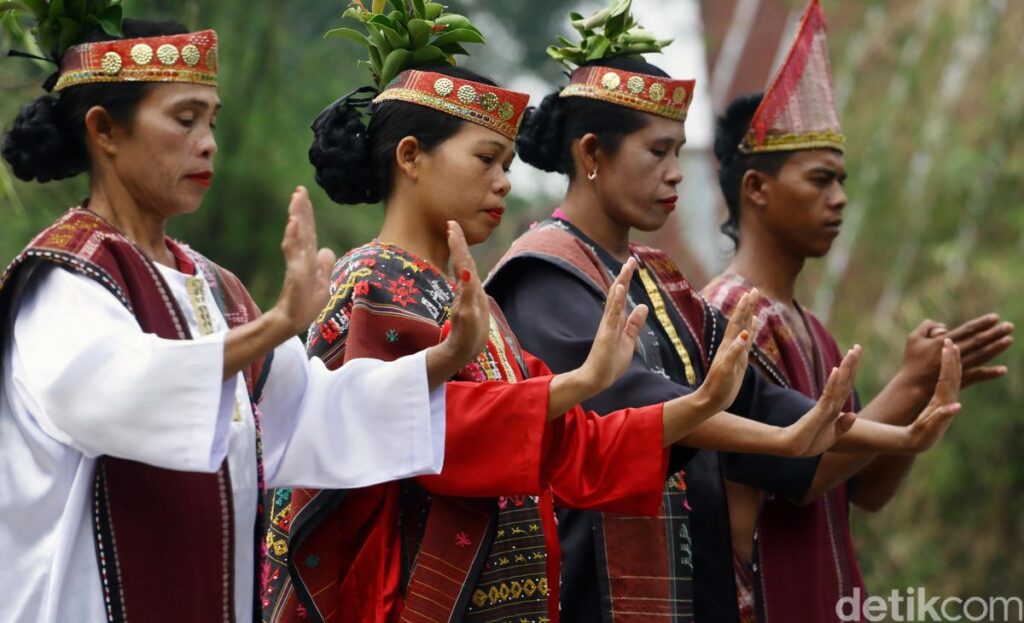
History: Ancient stone statues in Samosir were once said to “dance” to the Tor-Tor during sacred rituals. The Magic: Dancers wear the Ulos (sacred shawl) and move their hands in a rhythmic, pumping motion to the sound of the Gondang (drums). The Message: It is a physical prayer. The downward movement of the hands symbolizes a request for blessings from ancestors, while the upward movement is a sign of gratitude to the Creator.
10. Tari Jaipong: The Spirit of the People (West Java)
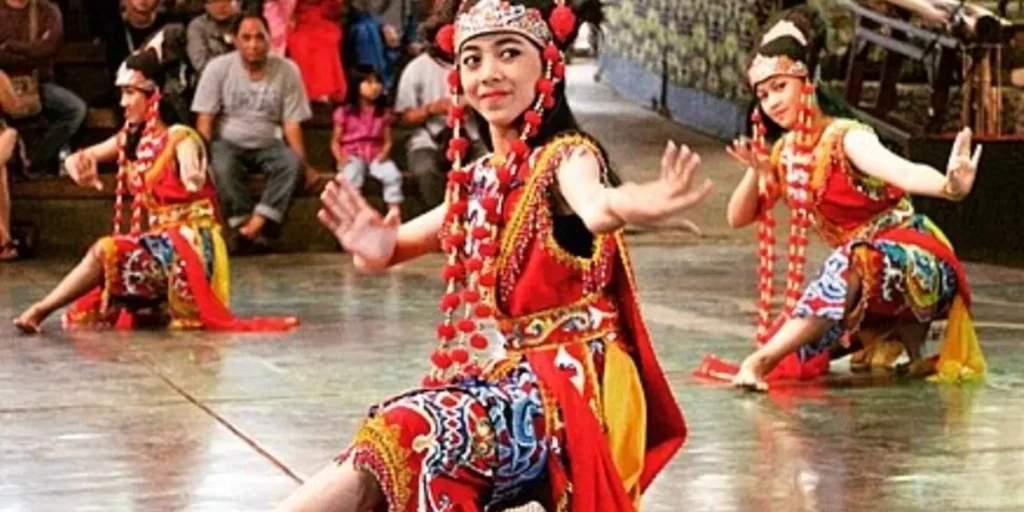
History: Born in the 1970s as a modern “folk” dance, it revitalized traditional village rhythms that were almost lost. The Magic: It is sensual, fast, and wildly energetic, featuring complex footwork and hip movements. The Message: Jaipong is the voice of the “rakyat” (the people). It represents joy, freedom of expression, and the unyielding vibrancy of Sundanese life.
The Art Traveler’s Map: 10 Best Destinations for Culture
If you want to truly immerse yourself in the creative pulse of the nation, these ten destinations offer the most diverse and concentrated cultural experiences.
1. Ubud: Where Every Corner Whispers a Story
Stepping into Ubud feels like walking into an open-air gallery. The “tink-tink” sound of a woodcarver’s chisel against teakwood is the neighborhood’s natural soundtrack. In the evenings, the Ubud Royal Palace transforms into a stage where gold-clad dancers move with a precision that tells a thousand-year-old tale.
2. Yogyakarta: The Royal Soul of Java
In Yogyakarta, tradition is lived with regal dignity. Walking through the Kraton (Sultan’s Palace), you’ll catch the distant melody of a bronze Gamelan echoing through the pavilion. It is a city that demands you slow down and listen to the stories etched in its stone and silk.
3. Solo: The Kingdom of Golden Wax
The undisputed home of Batik. Walking through Kampung Batik Laweyan is like stepping back in time. The faint smell of melting wax hangs in the humid air as grandmothers teach the next generation the meditative art of Batik Tulis.
4. Jakarta: The Modern Stage for Ancient Echoes
At Taman Ismail Marzuki (TIM), the atmosphere is electric with a mix of street theater and contemporary dance. For a nostalgic trip, visit Setu Babakan to see the colorful Ondel-ondel puppets towering over the crowds.
5. Ponorogo: The Land of the Tiger Kings
Travel to East Java to witness the raw power of Reog Ponorogo. Seeing the dancers lift the 50kg masks with only their teeth in the middle of a village square is an experience that will leave you speechless.
6. Banda Aceh: The Rhythm of the Veranda
Visit the “Veranda of Mecca” to witness the Saman Dance. Watching dozens of men move as one, clapping their chests and shoulders in a blur of motion, is a spiritual experience unlike any other.
7. Bukittinggi: The Minang Heartland
Nestled in the highlands of West Sumatra, this is the best place to see the Tari Piring and explore the magnificent Rumah Gadang (traditional houses) with their iconic buffalo-horn roofs.
8. Bandung: The Bamboo Symphony
Head to Saung Angklung Udjo. Here, hundreds of children play the Angklung in a massive wooden amphitheater. By the end of the show, you’ll be invited to play along, feeling the vibration of the bamboo in your own hands.
9. Samosir Island: The Batak Legacy
Located in the middle of Lake Toba, this island is where you can see the Sigale-gale puppet dance and the rhythmic Tor-Tor. The combination of ancient stone tombs and lake views makes it hauntingly beautiful.
10. Tana Toraja: The Land of Heavenly Kings
Known for its elaborate funeral rites, Toraja is where art and death intertwine. The wood-carved Tau-Tau (effigies) and the rhythmic Ma’badong chants offer a deep look into a culture that views life as a journey toward the ancestors.
The “Insider” Guide: Tips for Cultured Travelers
- Cash is Queen: Small bills (Rp2,000 to Rp20,000) are essential for tipping street performers or buying handmade crafts at local markets.
- The Right Hand Rule: Always use your right hand when paying or receiving a gift. The left is considered “unclean.”
- Dress the Part: Carry a light sarong. Whether it’s a temple in Bali or a palace in Java, modesty is the highest form of respect.
- Timing is Everything: Many festivals follow lunar calendars. Ask a local or your guide for “Hari Pasaran” or temple anniversary dates.
Ready to Explore?
Indonesia is vast, and its best cultural secrets are often hidden in plain sight. If you want to experience these traditions without the stress of planning, we recommend Get on Explore.
As a specialized travel organizer for both international and local guests, Get on Explore curates authentic cultural journeys that take you beyond the typical tourist traps. From private Batik workshops to front-row seats at a hidden village Reog festival, they ensure your trip is as meaningful as it is memorable.