Get on Explore – Indonesia is more than just a pin on a map or a collection of “Instagrammable” backdrops. With over 17,000 islands and 1,300 ethnic groups, it is a living, breathing mosaic of traditions. However, as the world becomes more connected, the footprint we leave behind matters more than ever.
Ethical cultural tourism in Indonesia isn’t about just visiting; it’s about engaging in a way that preserves the sanctity of the local heritage and ensures that the communities you visit actually benefit from your presence.
Why Ethics Matter in the Archipelago
When we talk about “Ethical Tourism,” we are looking at three main pillars: Economic Fairness, Environmental Protection, and Cultural Integrity.
In Indonesia, culture is deeply intertwined with daily life. A ritual isn’t a performance for tourists; it’s a sacred duty. When travelers approach these experiences with an ethical mindset, it transforms a standard vacation into a profound exchange of human connection.
The Impact of Your Visit
- Support Local Artisans: Buying a mass-produced souvenir from a mall is easy, but buying a hand-woven Tenun cloth directly from a weaver in Flores keeps an ancient craft alive.
- Preserve Traditions: By respecting local “Adat” (traditional laws), you help ensure these customs aren’t diluted or “Disney-fied” for the sake of tourism.
Mastering the “Indonesian Way”: A Lesson in Local Etiquette
To truly practice ethical cultural tourism, you need to understand the social fabric of the country. Indonesians are famously known as some of the friendliest people on earth, but their kindness is rooted in a specific set of social codes.
Here is how you can show respect (and earn a genuine smile in return):
1. The Power of “Senyum, Salam, Sapa”
In Indonesia, there is a core philosophy known as 3S: Senyum (Smile), Salam (Greeting), and Sapa (Speaking/Acknowledging).
- The Smile: It’s the universal icebreaker. Even if you don’t speak the language, a warm smile goes a long way.
- The Greeting: A slight nod or a polite “Permisi” (excuse me) when passing people is highly valued.
2. The “Nunduk” (The Polite Lean)
If you walk past a group of elders or people sitting down, you might notice locals lowering their shoulders and slightly bending their bodies forward while extending one hand downward. This is called Nunduk. It’s a physical manifestation of humility and respect. Doing this as a foreigner is the ultimate “pro-traveler” move that shows you truly understand the culture.
3. Dress for the Occasion
Indonesia is home to the world’s largest Muslim population, alongside vibrant Hindu, Christian, and Buddhist communities.
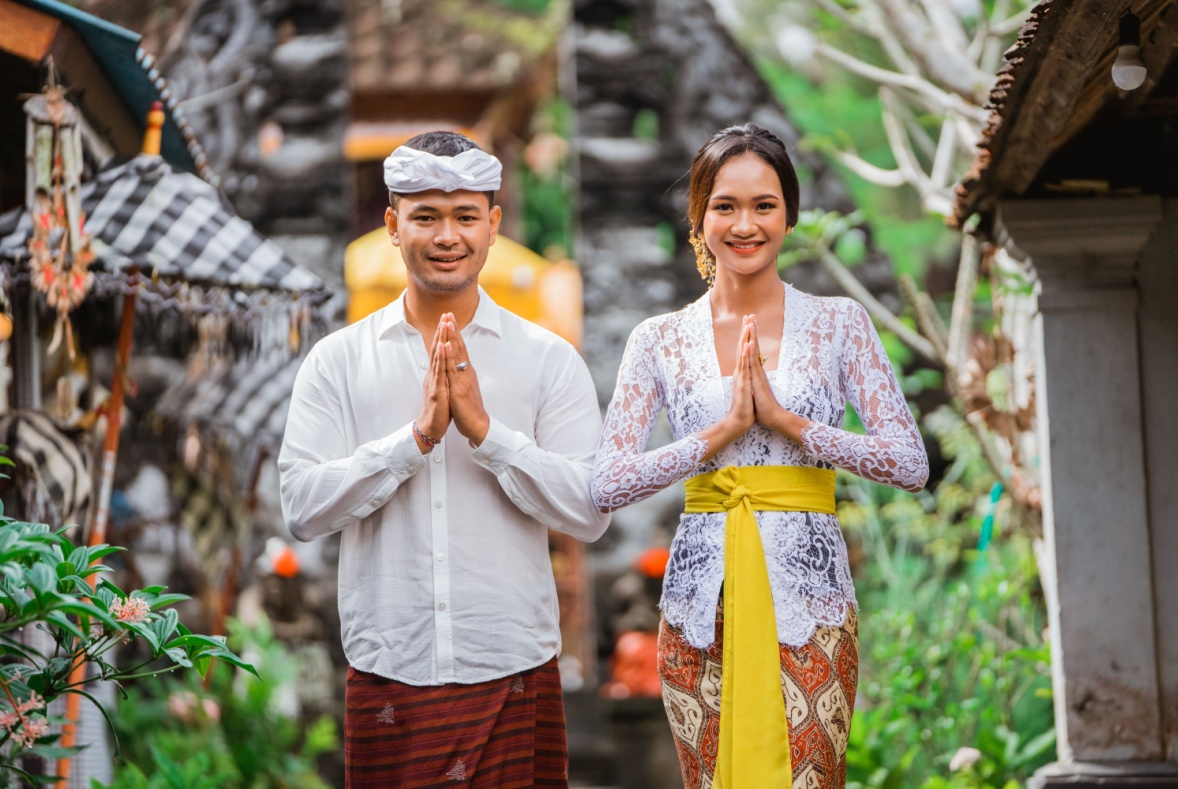
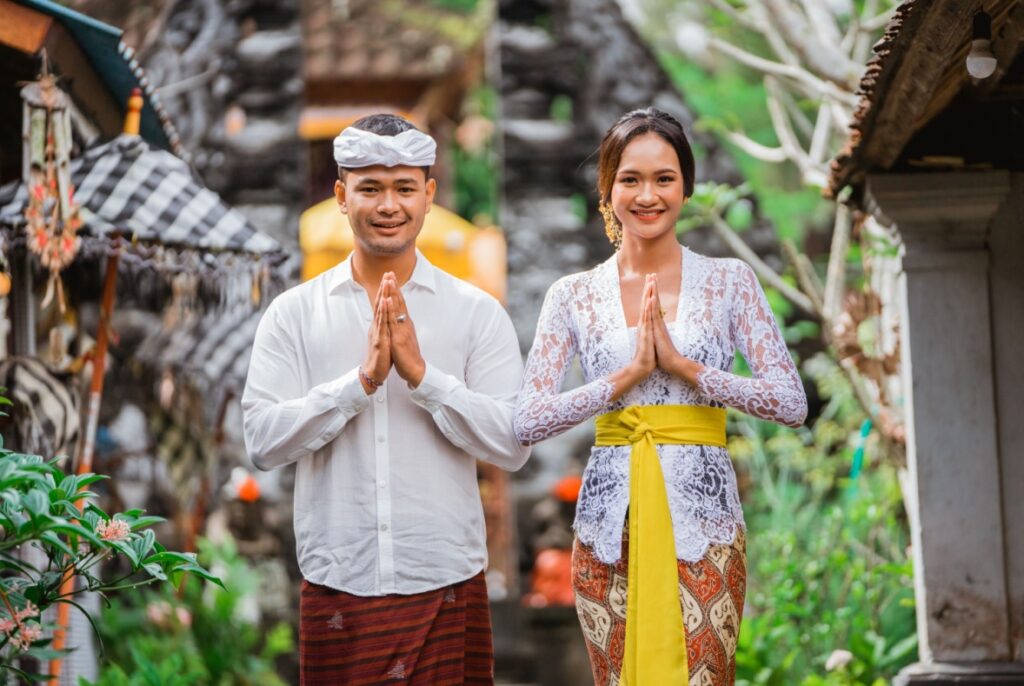
- Temples and Mosques: Always cover your shoulders and knees. Many Balinese temples require a Sarong and sash.
- In Public: While beachwear is fine for the shore, wearing a bikini in a village or a local market is considered disrespectful. Aim for “Modest Chic.”
4. The Right Hand Rule
Always use your right hand to give or receive items, and especially for eating. The left hand is traditionally associated with personal hygiene and is considered “unclean” for social interactions.
Ethical Travel Spotlight: Regional Nuances
| Region | Cultural Focus | Ethical Tip |
| Bali | Hindu Ceremonies | Do not stand higher than the priest or use flash photography during prayers. |
| Yogyakarta | Javanese Royalty | Speak in low tones and avoid pointing your feet at people or sacred objects. |
| Toraja | Funeral Rites | These are somber yet celebratory events; always ask permission before taking photos of the deceased’s family. |
| Lombok | Sasak Villages | Always accept the offered coffee or tea (even a sip) to show appreciation for their hospitality. |
Beyond the “Selfie”: How to Be a Better Guest
Ethical cultural tourism in Indonesia means moving beyond the “I was here” photo op.
Ask Before You Click
It’s easy to see a colorful ritual and immediately reach for your camera. Stop. Observe first. Ask a local guide or the person involved, “Boleh foto?” (May I take a photo?). It builds a bridge rather than a wall.
The “Overtourism” Reality
Places like the Ubud Monkey Forest or Borobudur are iconic, but they suffer from heavy foot traffic. Consider visiting “secondary” cultural sites. Instead of just Bali, explore the cultural richness of Sumba, the megalithic villages of Nias, or the spiritual quietude of Banda Neira.
How to Support the Local Economy Ethically
- Eat Local: Skip the global fast-food chains. Visit a Warung (family-run eatery). Not only is the food better, but your money goes directly into a family’s pocket.
- Hire Local Guides: A guide from the community doesn’t just show you the sights; they tell you the stories and the “why” behind the traditions.
- Fair Bargaining: While haggling is part of the culture in markets, don’t squeeze the vendor over a few cents. That small change might mean a lot more to them than it does to your travel budget.
The Environmental Connection
You cannot separate culture from the land in Indonesia. Many indigenous groups, like the Baduy in Banten or the Dayak in Kalimantan, view nature as sacred.
- Waste Management: Indonesia is currently battling a plastic crisis. Carry a reusable water bottle and avoid single-use plastics.
- Animal Welfare: Avoid “cultural” shows that involve mistreated animals. Ethical tourism means respecting all living beings.
7-Day Ethical Itinerary: The Cultural Heart of Bali
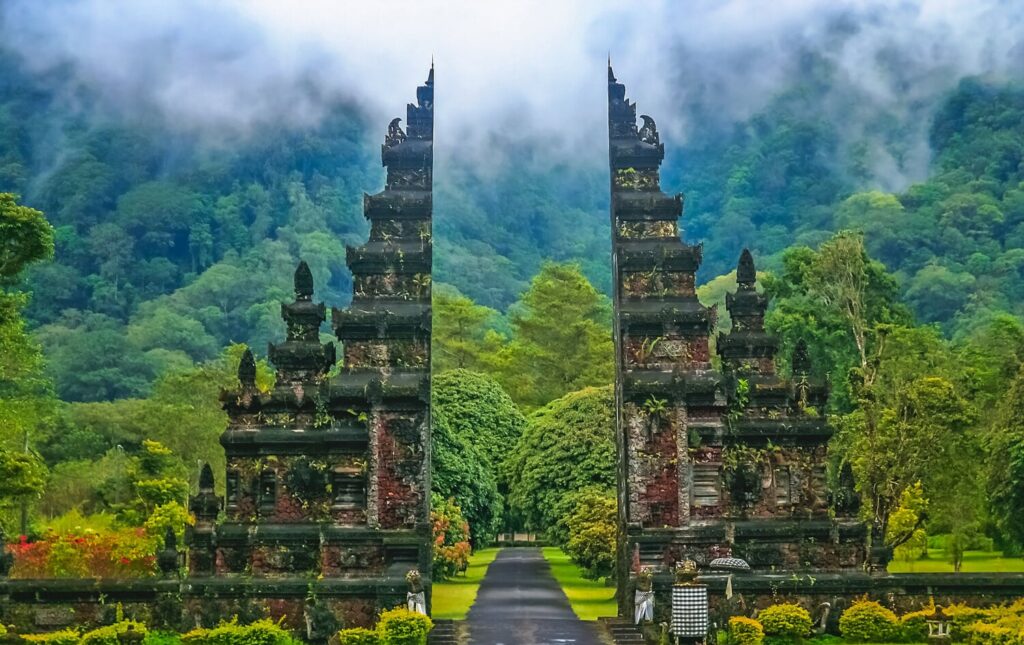
While many see Bali as a party destination, its heart lies in its villages and spiritual practices. This 7-day itinerary focuses on Regenerative Tourism—leaving the island better than you found it.
Day 1: Arrival & Mindful Grounding
- Arrive in Sanur: Opt for this quieter coastal town over the high-traffic areas.
- Evening: Attend a local beach cleaning initiative or a briefing on Balinese waste management issues.
- Ethical Tip: Buy a reusable “Refill My Bottle” flask to avoid single-use plastics.
Day 2: The Art of Offering (Canang Sari)
- Location: Sidemen Valley.
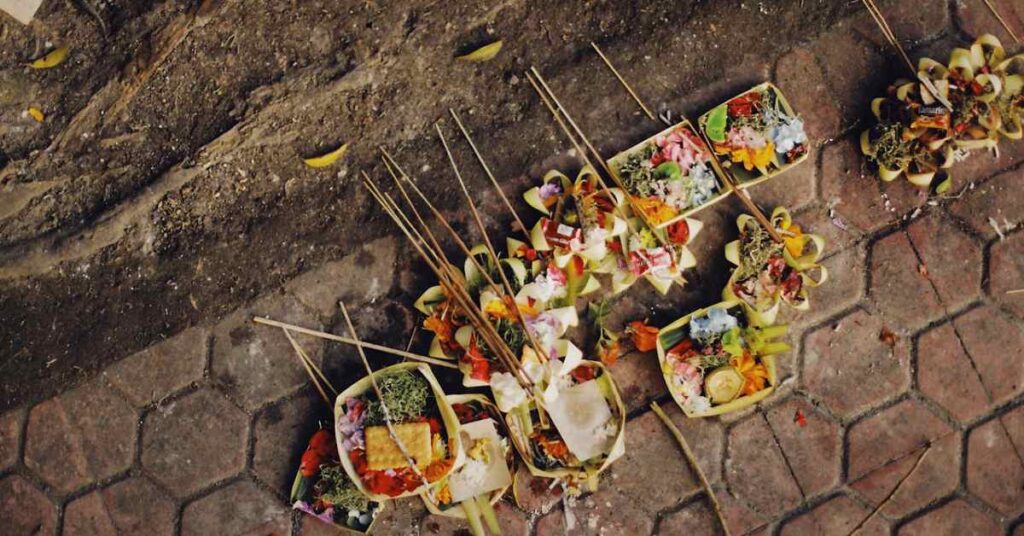
- Activity: Join a local family to learn the meaning behind Canang Sari (daily offerings). Learn why they use organic materials like palm leaves and flowers.
- Support: Pay a fair workshop fee that goes directly to the family.
Day 3: Subak & Sustainable Farming
- Location: Jatiluwih Rice Terraces.
- Activity: Walk the fields with a local farmer. Learn about Subak, the ancient democratic water-sharing system.
- Lunch: Eat at a Warung (family-run stall) that sources ingredients from the surrounding fields.
Day 4: Ancient Crafts in East Bali
- Location: Tenganan Pegringsingan (Ancient Aga Village).
- Activity: Observe the creation of Geringsing—a rare double-ikat fabric.
- Ethical Tip: Buy directly from the weaver. Ask about the natural dyes used (Indigo, Morinda) to understand the environmental connection.
Day 5: Spiritual Literacy & Water Purification
- Location: Tirta Empul or a lesser-known water temple.
- Activity: Participate in Melukat (purification ritual) guided by a local priest who explains the philosophy of Tri Hita Karana (harmony between humans, nature, and the divine).
- Rule: Follow all temple dress codes strictly.
Day 6: Culinary Heritage
- Location: Ubud Peripheral Villages.
- Activity: Take a traditional cooking class using a wood-fired stove. Focus on “Slow Food” traditions.
- Interaction: Discuss with the hosts how tourism has changed their village over the last decade.
Day 7: Marine Conservation & Departure
- Location: Pemuteran (North Bali).
- Activity: Visit the Biorock reef restoration project. Learn how the community saved their coral reefs to sustain local fishing and tourism.
- Final Reflection: Write in your journal about one local person who changed your perspective.
How to Be a Better Guest: The “Pro-Traveler” Checklist
| Action | Why it Matters |
| Ask Before Snapping | Respects the privacy of locals during sacred rituals. |
| Hire Local Guides | Ensures the economic benefits of tourism stay in the community. |
| Fair Bargaining | A few cents might not mean much to you, but it’s a meal for a vendor. |
| Eat “Kaki Lima” | Street food supports micro-entrepreneurs and offers the most authentic flavors. |
7-Day Ethical Itinerary: The Living Traditions of West & East Sumba
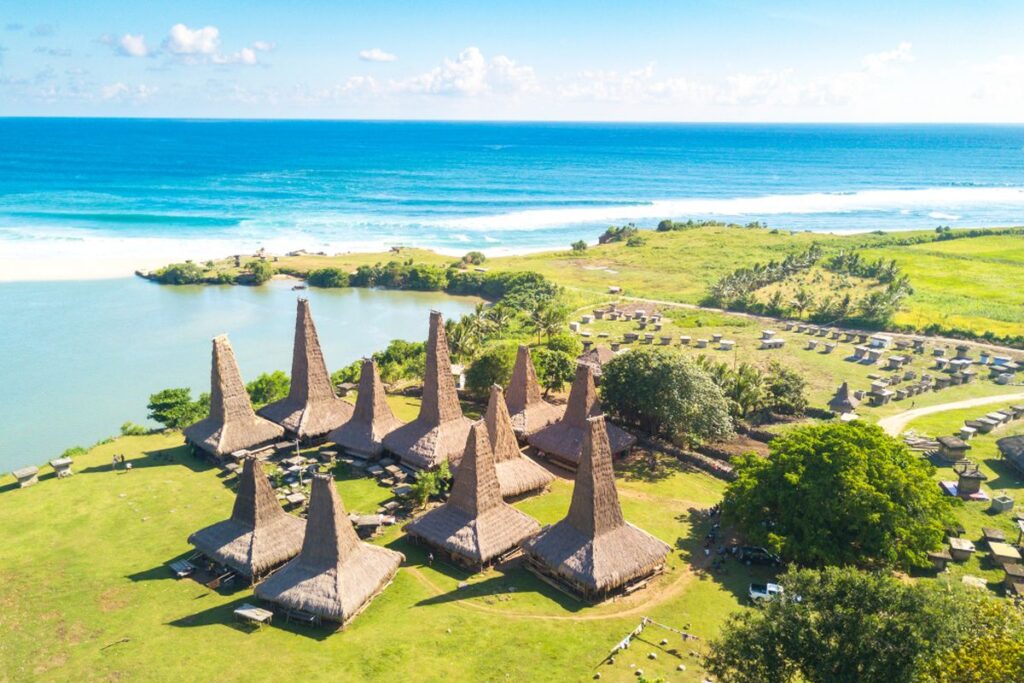
This itinerary is designed to minimize environmental impact while maximizing the economic benefit to the local Sumbanese people.
Day 1: Arrival & The “Guest Book” Ritual
- Arrive in Tambolaka (West Sumba): Check into a locally-owned eco-lodge.
- Activity: Visit a nearby village to sign the guest book and provide a small “cultural donation.”
- Ethical Tip: Instead of giving candy to children (which causes dental issues in areas with low care), donate school supplies to the village elder.
Day 2: The Architecture of Spirits
- Location: Ratenggaro Village.
- Activity: Marvel at the tallest traditional roofs in Sumba. Engage with a local guide to learn how these houses are built without a single nail.
- Respect: Ask permission before photographing the megalithic tombs; they are the resting places of beloved ancestors.
Day 3: The Blue Mirror of Weekuri
- Location: Weekuri Lagoon.
- Activity: Swim in the saltwater lagoon.
- Ethical Tip: Avoid chemical sunscreens that harm the delicate limestone ecosystem. Use “reef-safe” alternatives. Buy fresh coconuts from the local vendors lining the entrance to support their livelihoods.
Day 4: The Sacred Thread (Ikat Weaving)
- Location: Lamboya or Wanokaka.
- Activity: Spend the day with a weaving collective. Sumba Ikat can take months or even years to complete using natural dyes from roots and leaves.
- Support: Purchase a piece of fabric. It is an investment in a dying art form.
Day 5: Crossing to the East (Waingapu)
- Travel: Drive across the rolling “Lendongara” hills.
- Activity: Stop at local markets to buy “Kopi Sumba” (Sumba Coffee).
- Interaction: Use your Salam and Sapa at the market. A simple “Berapa harganya, Pak/Bu?” (How much is this?) goes a long way.
Day 6: The Savanna & The Sea
- Location: Puru Kambera & Wairinding Hills.
- Activity: Witness the wild horses of Sumba.
- Ethical Tip: Keep a respectful distance from the horses. They are central to Sumba’s identity and are not “props” for selfies.
Day 7: Tanggedu Waterfall & Reflection
- Activity: A moderate trek to Tanggedu Waterfall.
- Conservation: Ensure you carry all your trash back to the city. Sumba has limited waste processing infrastructure.
- Departure: Head to Waingapu Airport for your flight out, carrying stories instead of just “content.”
Why Sumba Requires an Ethical Guide
| Ethical Challenge | The Solution |
| Language Barrier | Many elders only speak the local dialect. A guide translates the meaning, not just the words. |
| Access to Villages | Some villages are “closed” to the public unless you are introduced by a trusted partner. |
| Fair Pay | Ensuring your “entrance fees” actually reach the community and aren’t pocketed by middlemen. |
Mastering Javanese Etiquette (E-A-T Guide)
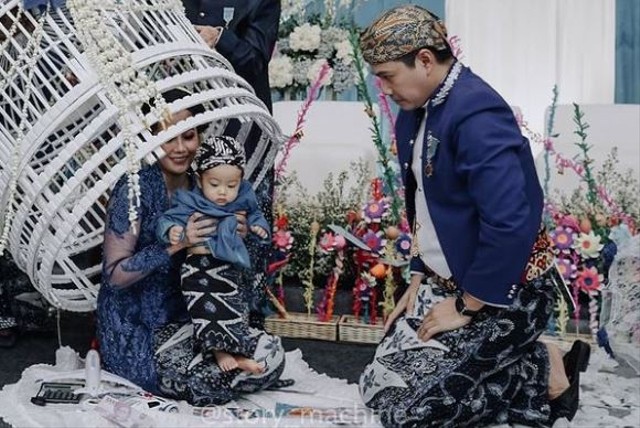
The Javanese culture is famously subtle. To show Expertise and Trustworthiness as a traveler, you should embrace these specific local “hidden” codes:
1. The “Andhap Asor” (Humility)
In Yogyakarta, high social value is placed on humility.
- The Gesture: When walking in front of people, especially elders or palace guards (Abdi Dalem), perform a slight Nunduk (bow) and extend your right hand downward. This signals that you do not see yourself as “above” them.
- The Voice: Speak in low, calm tones. Raising your voice is seen as a loss of self-control and is highly disrespectful.
2. Sacred Stones and Proper Attire
The temples of Borobudur and Prambanan are not just monuments; they are active places of pilgrimage.
- Dress Code: Always cover your shoulders and knees. While some temples provide a free Sarong, arriving in modest dress (long linen pants or maxi skirts) shows proactive respect.
- Physical Respect: Never sit or climb on the stupas or temple walls. These stones have survived over a millennium; our oils and weight cause irreparable micro-damage.
3. The Tenggerese “Salam”
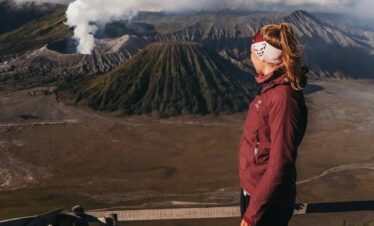
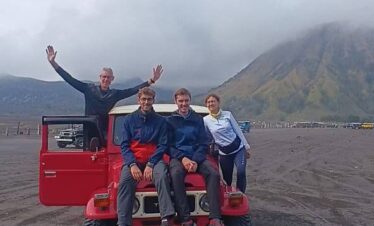
At Mount Bromo, you are in the land of the Tenggerese people, the last Hindu community in Java. They view Bromo as a sacred altar.
- The Greeting: Use your right hand for everything—from paying your Jeep driver to receiving a cup of hot Wedang Ronde (ginger soup).
7-Day Ethical Itinerary: The Royal & Volcanic Route
This route connects the intellectual capital of Yogyakarta with the raw natural power of East Java, focusing on community-led experiences.
Day 1: The Kraton & Water Castle
- Location: Yogyakarta City.
- Activity: Visit the Kraton (Sultan’s Palace). Observe the Abdi Dalem (loyal servants) who serve not for money, but for honor.
- Ethical Tip: Hire one of the palace guides; they are usually retired teachers or locals with deep historical knowledge.
Day 2: The Path of the Buddha (Borobudur)
- Location: Magelang (1-hour drive).
- Activity: Visit Borobudur at sunrise.
- Ethical Change: Use the official “Upasaka” sandals provided by the park to protect the ancient stones from friction.
- Community: Spend the afternoon in Candirejo Village for a horse-cart tour to see how locals harvest chili and vanilla.
Day 3: The Hindu Epics (Prambanan)
- Location: Prambanan Plain.
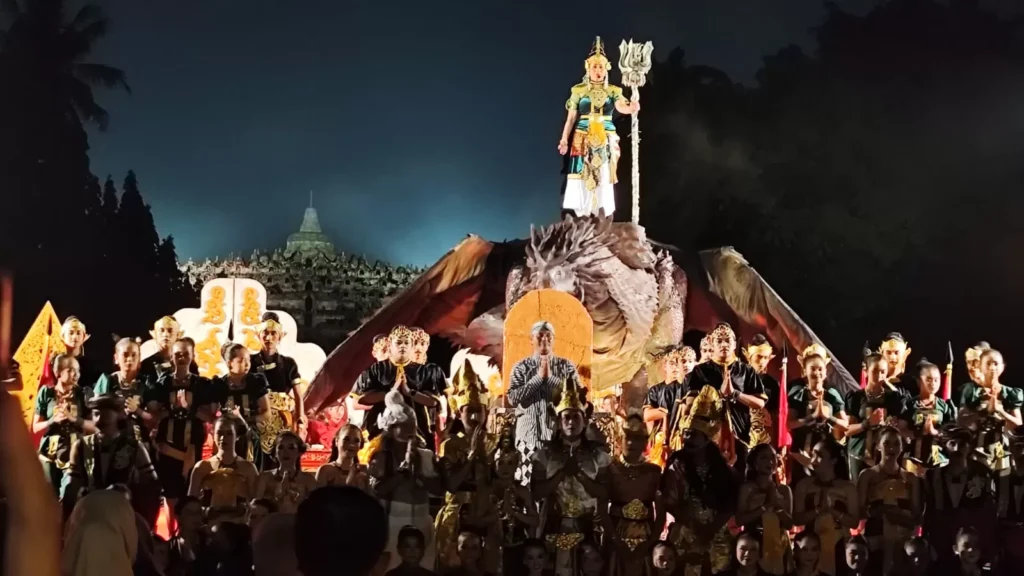
- Activity: Explore the towering spires of Prambanan. In the evening, watch the Ramayana Ballet—a performance that employs hundreds of local dancers and musicians.
- Ethical Tip: Choose the open-air theater to see the temple as the backdrop.
Day 4: The Great Java Overland
- Activity: Take the Executive Train from Yogyakarta to Jombang or Probolinggo.
- Why: Taking the train is more eco-friendly than a private 10-hour car journey and offers a front-row seat to the stunning Javanese countryside.
- Evening: Arrive in Cemoro Lawang, the village on the edge of the Bromo caldera.
Day 5: The Sacred Caldera of Bromo
- Activity: 3:00 AM Jeep journey to King Kong Hill for the sunrise.
- Ethical Choice: Instead of taking a horse to the crater rim, hike across the Sea of Sand. It reduces animal labor and gives you a much deeper connection to the “Whispering Sands.”
- Respect: If you see a local Tenggerese person making an offering at the Pura Luhur Poten temple, watch from a distance and keep your camera away.
Day 6: The Madakaripura Hidden Falls
- Location: Near Bromo.
- Activity: Trek to Madakaripura Waterfall, where the legendary Majapahit general Gajah Mada is said to have meditated.
- Support: Use local “Ojek” (motorbike taxi) drivers from the village; this is their primary source of income.
Day 7: Batik Heritage & Departure
- Location: Back to Surabaya or Malang.
- Activity: Visit a Batik Tulis (hand-drawn batik) workshop.
- Ethical Purchase: A genuine hand-drawn batik can take weeks to make. Paying a premium price ensures the survival of this UNESCO-recognized art form.
The “Green & Gracious” Traveler’s Checklist
| Action | Why it Matters in Java |
| Use “Maturnuwun” | This is “Thank you” in Javanese. Using local dialect shows you aren’t just a passerby. |
| Avoid Public Affection | Java is conservative. Keep hugging and kissing for private spaces to avoid local discomfort. |
| No “Selfie” Obstruction | In temples, don’t block the path of locals who are there to pray. |
| Mind Your Feet | When sitting on the floor (Lesehan), never point the soles of your feet at someone or at sacred objects. |
Ready to Experience the Real Indonesia?
Navigating the complexities of a multi-cultural archipelago can be daunting. If you want to ensure your journey is not only memorable but also deeply respectful and impactful, you need a partner who knows the land.
We highly recommend Get on Explore.
As a premier travel organizer specializing in both local and international guests, Get on Explore is dedicated to the principles of ethical cultural tourism in Indonesia. They don’t just take you to the landmarks; they introduce you to the soul of the country. From curated village stays to respectful guided tours of sacred sites, they ensure that your visit supports the community and preserves the beauty of Indonesia for generations to come.